
Dinosaur from the Ankylosauria group, around 146 million years old, discovered in Torres Vedras
A team of researchers from the Centre for Research in Paleobiology and Paleoecology (Ci2Paleo) of the Sociedade de História Natural de Torres Vedras (SHN) has recently completed the excavation, in the coastal cliffs of the municipality of Torres Vedras, of a dinosaur fossil belonging to the Ankylosauria group, approximately 146 million years old, which may represent the most complete dinosaur ever found in Portugal.
The discovery began in June 2025, during prospecting and inventory work carried out as part of the Geographic Information System Applied to Palaeontology. It was then that Luís Domingos, a researcher at SHN, identified part of a femur exposed in a cliff near the mouth of the Sizandro River. The intervention made it possible to recover the fossil element before it was destroyed by coastal erosion.
Preliminary analysis revealed unusual characteristics, prompting the team to return to the site and carry out further investigations. During the subsequent fieldwork campaigns, dozens of osteoderms - bony plates that formed part of these animals’ armour - were recovered, along with spikes and numerous skeletal elements, allowing the specimen to be assigned to the Ankylosauria group.
An exceptional specimen from the Late Jurassic
The fossil was found in a geological unit dating to the Late Jurassic, approximately 146 million years ago. Its age makes it particularly significant for our understanding of this group of dinosaurs in Europe.
Dinosaurs belonging to the Ankylosauria group were quadrupedal herbivores, easily recognised by their armour of bony plates and, on different parts of the body, defensive structures such as spikes.
The Torres Vedras specimen also stands out for its exceptional state of preservation. The work carried out so far indicates that approximately 85% of the skeleton may be preserved. The animal is in an unusual position, with its body lying ventral side down, and some skeletal elements may still remain hidden beneath the osteoderms, spikes and surrounding rock matrix.
Excavation completed and fossil block removed
After several fieldwork campaigns, the excavation was completed with the removal of the fossil-bearing block containing a significant part of the specimen. This operation represented one of the most delicate stages of the entire process, requiring the block to be consolidated and protected to ensure the safety of the fossils during removal and transport.
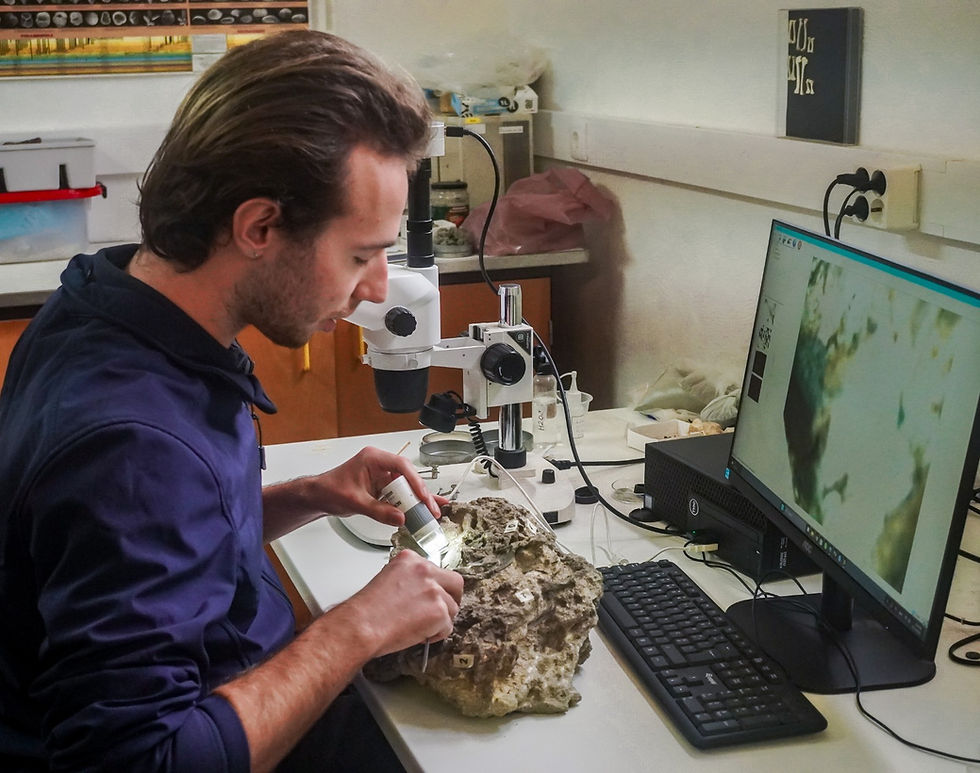
With the block successfully removed, a new phase of work now begins. In the laboratory, the block will be carefully prepared, progressively removing the rock surrounding the fossils and revealing elements that were not visible during the excavation.
Only after the preparation and detailed analysis of all the elements will it be possible to fully understand the anatomical characteristics of the specimen and determine its position within the evolutionary history of the Ankylosauria with greater precision.
Due to its age, high degree of preservation and rarity, this fossil could become one of the most significant dinosaur discoveries made in Portugal in recent decades, while also reinforcing the importance of the palaeontological heritage of the municipality of Torres Vedras and of the Portuguese Late Jurassic.
The Sociedade de História Natural de Torres Vedras will continue its preparation, study and research of this specimen, contributing to the preservation and advancement of knowledge of Portugal’s palaeontological heritage.
Stay tuned for more updates!




Comments